Cleaning Brushed It Out. Sealing Locks the Rest Behind the Brick.
The warm-season smell isn’t loose creosote — it’s residue embedded in the porous masonry of your smoke chamber. Sealing follows cleaning, doesn’t replace it, and closes the pathway the brush can’t reach.
Cleaning Removes the Deposits. Sealing Stops the Smell.
Chimney odor sealing NYC is the treatment step that follows cleaning — not a replacement for it.
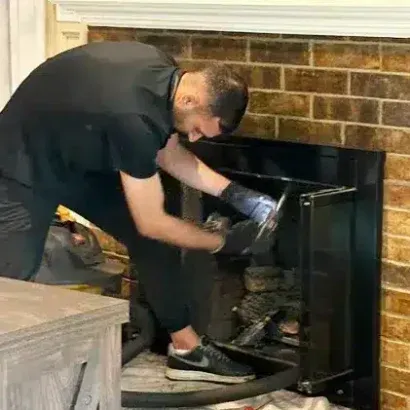
Your flue was brushed. The loose creosote came out. But the smell came back in June. That happens because creosote doesn’t only sit loose inside the flue. It absorbs into the porous masonry of the smoke chamber and firebox walls over years of use. Cleaning removes what’s on the surface. Sealing closes off what’s embedded beneath it — the layer that keeps releasing odor when temperatures rise.
Why Park Slope, Carroll Gardens, and Cobble Hill Generate the Most Odor Sealing Calls
Brooklyn’s renovated pre-war brownstones create the exact conditions that make chimney odor sealing a recurring warm-season call.
Prime Chimney dispatches from Brooklyn. Our crews cover Park Slope, Carroll Gardens, Cobble Hill, and the surrounding neighborhoods regularly. When you seal windows and run central air in a pre-war brownstone, indoor air pressure drops. That pressure drop pulls air down through the flue and into the living space. As that air passes through the smoke chamber, it picks up volatile organic compounds — gases released from embedded creosote residue — and carries them into the room as odor.
The flue is clean. The air is moving the wrong direction. The porous masonry walls of the smoke chamber are the source. That’s the situation chimney odor sealing is designed to address.
What Our Team Found in a Carroll Gardens Brownstone Last July
The smoke chamber walls were the source — and standard cleaning had already reached its limit.
Our team responded to a call in late July from a Carroll Gardens homeowner. The smell had returned for the third summer in a row. A full chimney cleaning had been completed each of the past two years. The flue interior was clean. The damper was functional. No animal intrusion, no moisture issue. The complaint was specific: every time the central air ran for more than an hour, the living room smelled like a campfire.
We pulled the damper and examined the smoke chamber walls. The corbelled masonry above the firebox throat — that transitional zone where the firebox narrows into the flue — was visibly stained and rough-textured from years of combustion deposits. Mechanical cleaning had removed the loose material. What remained was embedded: creosote residue that had worked into the pores of the masonry over multiple heating seasons.
This is embedded creosote residue — creosote that has penetrated the pores of firebox brick and smoke chamber masonry over years of combustion cycles. A brush cannot extract it. In warm weather, it volatilizes. The heat and the AC-driven negative pressure do the rest.
We dried the surfaces thoroughly, confirmed they were free of loose debris, and applied a smoke chamber sealing compound — a refractory-compatible coating designed for this surface. The compound penetrates the porous masonry and reduces its ability to off-gas. It closes the emission pathway rather than trying to remove what’s already embedded.
The homeowner called back in September. No smell. Air conditioning had run all August. The treatment held.
The Sealing Works Because the Sequence Is Right
Applying sealer to unsound or dirty surfaces doesn’t bond — that’s why the post-cleaning application sequence matters.
Some homeowners ask whether they can skip straight to sealing without the cleaning step. The answer is no.
Mechanical removal of loose creosote, soot, and debris from the flue interior, smoke chamber, and firebox walls. The brush extracts what’s sitting on the surface. Cleaning is the prerequisite — sound, clean, dry masonry is what a sealing compound needs to bond to. Without it, the sealer bonds to debris instead of the masonry substrate and fails within one season.
Closes the emission pathway in the porous masonry beneath the surface. A refractory-compatible smoke chamber sealing compound penetrates the pores of the brick or refractory material and reduces its ability to off-gas the volatile organic compounds that warm weather and AC-driven negative pressure pull into your living space. The treatment doesn’t remove the embedded residue — it seals the surface so the residue can’t reach the air inside your home.
At Prime Chimney, the odor sealing visit always follows a completed cleaning visit. Surfaces are confirmed clean and dry before any compound is applied. That’s not procedural formality — it’s what makes the treatment last.
Our Standards for Chimney Odor Sealing in NYC
Every odor sealing visit follows a fixed sequence — no shortcuts, regardless of how straightforward the job looks.
Cleaning Confirmed First
Cleaning is completed and confirmed before any sealing compound is applied. If the previous cleaning visit isn’t recent or verifiable, we schedule one before the sealing visit, not during it.
Surface Condition Check
Surfaces are assessed for moisture and loose debris before the compound is introduced. Sealer applied to damp masonry or residual debris bonds to the wrong layer and fails.
Refractory-Compatible Compound
The smoke chamber sealing compound is refractory-compatible — it won’t block airflow or interfere with draft during fireplace use. The flue performance is preserved.
Full Coverage Application
Application covers the smoke chamber interior and firebox walls — the surfaces where embedded creosote residue concentrates. Coverage is verified before the job is closed.
Porosity-Matched Application Rate
Surface porosity of the firebox masonry is assessed before selecting compound type. Older NYC pre-war fireplaces with high-porosity brick may require a different application rate than newer refractory materials.
Written Treatment Summary
The homeowner is told exactly what was treated and what to expect if the smell returns after a second season. Written, not verbal — so you know what was applied where.
We work across all five NYC boroughs. The same standards apply whether the job is in a Park Slope brownstone or a Staten Island single-family home.
Cleaning Was Done. The Smell Came Back. Now What.
The next step is sealing — applied to the smoke chamber and firebox walls where embedded creosote lives. Call (347) 801-0260 to book a sealing visit across all five NYC boroughs.
How a Chimney Odor Sealing Visit Works
The process has three stages — assessment, application, and confirmation that the treatment was applied correctly.
Reading the Smoke Chamber First
The tech begins at the firebox. Damper operation is confirmed. The smoke chamber is examined for loose debris, moisture, and the condition of the corbelled or poured masonry surface. Surface porosity is assessed visually and by touch. The tech confirms that prior cleaning is complete and that no active moisture is present in the masonry. If cleaning has not been performed recently, the odor sealing visit is rescheduled to follow the cleaning visit. Sealing over uncleaned or damp surfaces reduces bond quality and treatment effectiveness.
Applying the Sealing Compound
Once surfaces are confirmed clean and dry, the sealing compound is applied to the smoke chamber walls and firebox interior. Coverage is checked to confirm the compound has reached all relevant surfaces, including the upper corbelled section of the smoke chamber where heat concentration from combustion is highest. The compound sets as it dries. The firebox is not used until the compound has cured fully — the tech confirms the expected cure window before leaving.
Confirming What Was Done
The tech walks the homeowner through what was treated, what compound was used, and what the expected outcome is. If the smell returns after a full warm season, that points to either a secondary odor source — moisture, organic debris, or an animal nesting issue — or indicates that masonry porosity is higher than standard and a second application pass is warranted. The homeowner leaves the visit with a clear picture of what was done and what to watch for.
Neighborhoods We Serve Across New York City
Prime Chimney covers all five NYC boroughs for chimney odor sealing and related fireplace services.
We dispatch from Brooklyn and reach Manhattan, Queens, the Bronx, and Staten Island. Neighborhoods we serve regularly include Park Slope, Carroll Gardens, Cobble Hill, Crown Heights, Bed-Stuy, Flatbush, Astoria, Jackson Heights, Washington Heights, Inwood, Riverdale, and neighborhoods across Staten Island. If you’re in New York City, we can reach you.
Call (347) 801-0260 to confirm your neighborhood and schedule.
Ready to Stop the Smell? Here's How to Reach Us.
Book a chimney odor sealing visit with Prime Chimney — available across all five NYC boroughs.
Call (347) 801-0260 to schedule. Tell us your borough, how long the smell has been present, and whether a recent cleaning was completed. We’ll match you with the right visit type and get you on the calendar.
For urgent situations, we’re available 24/7.
Frequently Asked Questions
No — and the reason is mechanical, not procedural. A sealing compound needs to bond to sound, clean, dry masonry. If cleaning hasn’t been done first, the sealer bonds to the loose creosote, soot, and debris sitting on top of the masonry surface instead of penetrating into the masonry pores beneath. When that surface layer eventually moves or sheds, the sealer goes with it. The treatment fails within one warm season, and you’ve paid for both the sealing and the cleaning you skipped. We schedule the cleaning visit first if it isn’t already current. The sealing visit happens after surfaces are confirmed clean and dry.
Two things converge in summer. First, warm temperatures cause embedded creosote residue to volatilize — that’s the term for porous masonry releasing the volatile organic compounds that produce the smoky odor. The hotter the masonry gets, the more aggressive the off-gassing. Second, NYC summers mean central air conditioning, which creates negative pressure inside the apartment when windows are sealed. That negative pressure pulls air down through the chimney flue instead of letting it move upward and out — and the air picks up the volatile compounds in the smoke chamber on its way into your living room. In winter, the fireplace is in use or the windows aren’t sealed, so the pressure dynamic is different and the smell doesn’t reach you the same way. Sealing closes the off-gassing pathway, which is why the treatment holds through subsequent summers.
For a properly applied refractory-compatible compound on cleaned, sound masonry, the treatment generally holds for multiple warm seasons. The longevity depends on three factors: (1) the porosity of the masonry — older NYC pre-war fireplaces with high-porosity brick may benefit from a second application pass to reach full coverage, (2) whether the fireplace continues to be used — heavy continued use accelerates the formation of new creosote that can eventually require fresh cleaning + sealing cycles, and (3) whether the original cleaning was thorough. We tell each homeowner what to expect for their specific situation at the time of the visit. If the smell returns after a full warm season, that’s a signal to re-evaluate — either there’s a secondary odor source (moisture, organic debris) or porosity is higher than standard and a second application is warranted.
No — and that’s why we use a refractory-compatible compound specifically. The treatment is designed to seal the porous surface of the masonry without blocking airflow, interfering with draft, or affecting how the firebox or smoke chamber handles heat during fireplace use. The compound penetrates the masonry pores; it doesn’t form a thick film on top. After the compound cures fully — the tech confirms the cure window before leaving — the fireplace operates the same way it did before the sealing visit. Draft, combustion, and damper function are all preserved.
Fireplace odor removal is the diagnostic gateway — we identify which of three odor sources is producing the smell (creosote, organic decay, or moisture-driven mold), because each requires a different treatment path. Chimney odor sealing is the specific treatment for the creosote-origin source: it’s what happens after odor removal diagnosis confirms that the smell is coming from embedded creosote in the smoke chamber masonry, and standard cleaning has already been completed without resolving it. If you’re not sure which step you need, call (347) 801-0260 and describe the smell. We’ll route you to the right visit — diagnostic first if needed, sealing direct if the source is already confirmed.
© Prime Chimney Sweep & Repair · 919 E. 29th St., Brooklyn, NY 11210 · (347) 801-0260 · Licensed & insured · Serving all 5 NYC boroughs 24/7.