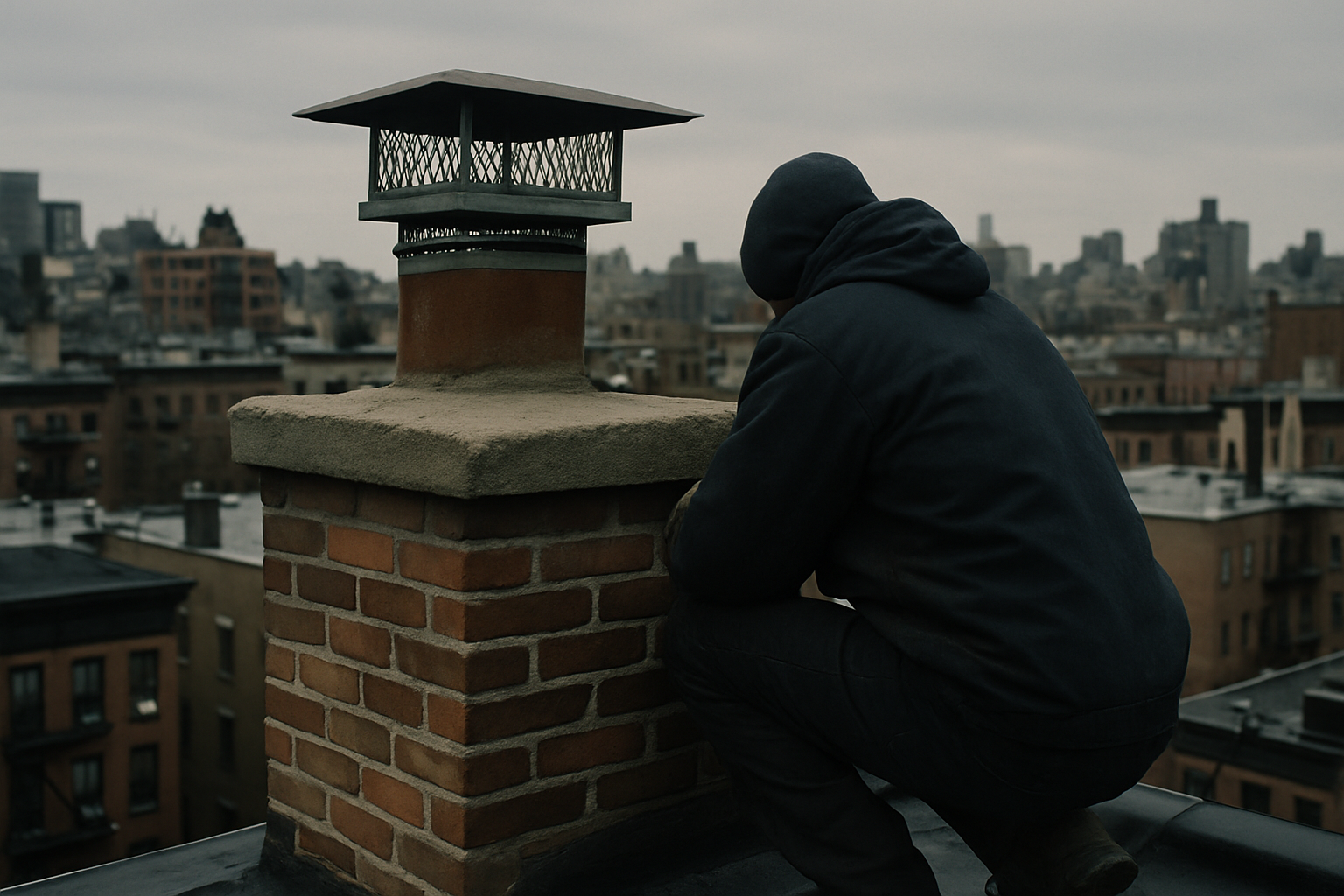
Most NYC homeowners either clean too late or spend money when it isn't needed. Here's how to tell the difference — from technicians who've seen the inside of thousands of chimneys across the five boroughs.
New York City chimneys handle more than just wood smoke. Between oil-to-gas conversions, aging brownstone flues, high-rise wind loading, and winters that swing between 10 and 50 degrees in the same week, the inspection problems we find here are specific to this city.
Learn more about spalling brick repair chimney NYC in The Bronx, NY →
Learn more about chimney mortar repointing NYC in Queens, NY →
Learn more about chimney leak repair New York →
Learn more about chimney sweep NYC →
Learn more about fireplace cleaning NYC in Brooklyn, NY →
Learn more about chimney animal removal NYC in Manhattan, NY →
Prime Chimney Sweep & Repair serves homeowners, co-op boards, and property managers across all five boroughs and surrounding metro counties. We handle the full spectrum: Level I, II, and III inspections per NFPA 211 standards, creosote removal, spalling brick repair, crown replacement, waterproofing, and gas appliance work.
The question we get most often is a good one: "Do I actually need a cleaning right now?" Below, we answer that honestly, with specifics that apply to NYC buildings. We also cover what our chimney cleaning NYC service includes, how long jobs take, and when you can safely wait.
All inspections follow National Fire Protection Association standards
Manhattan, Brooklyn, Queens, the Bronx, Staten Island, and surrounding metro counties
Available for inspections, cleanings, and emergency calls across NYC.
☎ (347) 801-0260 View Service Costs →Shine a flashlight up your firebox and look at the smoke chamber above the damper. If you see a shiny, tar-like black coating or thick matte black deposits, that's creosote. Glaze creosote (Stage 3) is a chimney fire waiting to happen and requires specialized chemical treatments before mechanical cleaning can remove it.
Any layer thicker than 1/8 inch is a cleaning trigger, per the Chimney Safety Institute of America. You can check their resources at csia.org.
If smoke doesn't draft upward cleanly, there's usually a blockage. In NYC buildings, the most common culprits are bird nests (especially starlings in early spring), collapsed flue tiles, or a partially closed or corroded damper plate.
Don't keep burning through the problem. Poor draft forces carbon monoxide into living spaces. A cleaning and inspection will identify which of these is the actual cause.
A smoky or burning smell from a fireplace you haven't used in months points to creosote reacting with summer humidity. Humid air makes volatile compounds in creosote smell strongly. The smell travels down into the room when the house is under negative air pressure from running A/C.
Our fireplace odor removal NYC service identifies whether the source is creosote, water intrusion, or an animal. Those require different fixes, and cleaning alone doesn't always resolve moisture-related odors.
The NFPA recommends annual inspection and cleaning for any wood-burning fireplace in regular use. If you burned frequently last season (weekly or more), schedule cleaning before the next season starts, not after.
Creosote accumulation is cumulative. One light season won't cause a fire; five light seasons without cleaning can. Most NYC cleaning jobs take 2 to 4 hours. We seal off the firebox to contain dust and soot, so your living room stays clean.
Twigs, leaves, animal droppings, or nesting material in the firebox means something got in through the top. That means your chimney cap is damaged, missing, or improperly sized.
Beyond the mess, a compromised cap lets water in. Water is often a bigger long-term threat to NYC chimneys than creosote. Mortar joints deteriorate, flue liners crack, and eventually you get masonry spalling down onto the firebox floor. Don't just sweep out the debris and forget it.
Real estate transactions in NYC regularly include a chimney inspection as a contingency. A Level II inspection is the standard for sale or transfer of a property. It includes a video scan of the flue interior.
If the inspection uncovers creosote or debris, the cleaning happens before the report is finalized. Sellers who address this proactively avoid renegotiations at closing. Buyers who skip it inherit whatever is in there.
If your fireplace has never been operational, has been permanently sealed, or is purely decorative with no working flue, creosote cannot accumulate. You may still want a structural inspection every few years for water damage, but annual cleaning isn't necessary.
Gas fireplaces don't produce creosote. However, they do need periodic inspection. Gas fireplace inspections in NYC focus on burner condition, pilot assembly, venting integrity, and gas valve function, not soot removal. If yours was serviced within the last 12 months and runs cleanly, a cleaning is not your priority.
If you burned fewer than six or eight fires last season and had a clean inspection the year before, you're likely fine. Book an inspection to verify the flue is clear, but a full cleaning may not be warranted. We'll tell you honestly what the camera shows.
A cleaning appointment isn't just brushing soot. Here's what you should expect from any reputable NYC chimney company.
Full Fireplace Cleaning Details →We brush from inside the firebox up through the smoke chamber and smoke shelf. The smoke shelf is where fallen debris and condensed creosote collect, and it's often skipped by less thorough contractors. Accumulated debris here blocks draft.
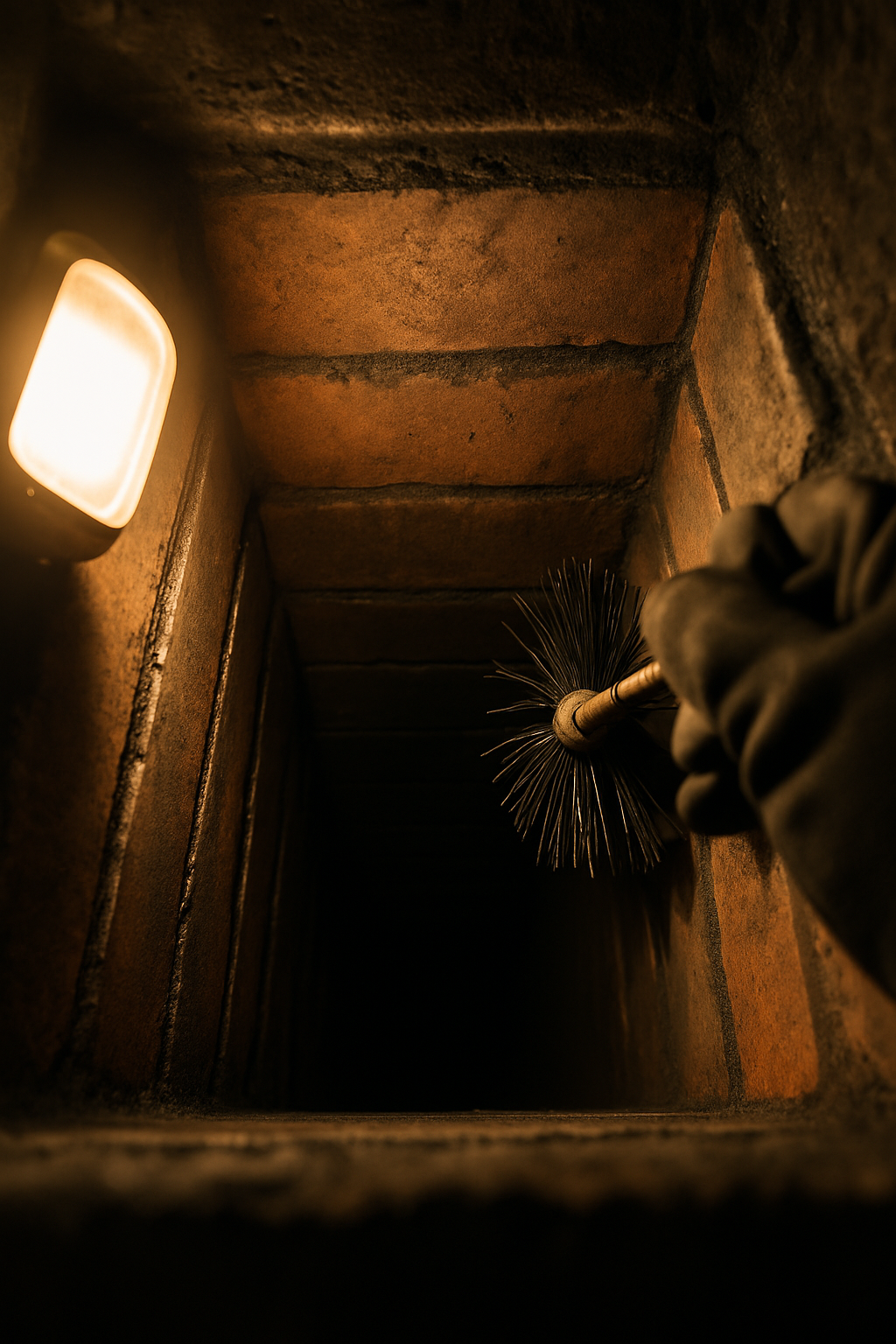
Rotary or rod-and-brush systems clear the flue liner from bottom to top. We check for cracked or displaced tiles during cleaning. In older NYC buildings, clay tile liners often show gaps at mortar joints that weren't visible at the last inspection.
We check that the damper opens, closes, and seals properly. A warped or corroded damper that doesn't fully close wastes heat in winter and lets conditioned air escape in summer. Replacement is a separate job, but we flag it during cleaning.
At the roofline, we inspect the chimney cap and crown for cracks or displacement. A cracked crown is one of the most common causes of chimney leaks in NYC. Water gets in through hairline crown cracks, freezes in winter, and opens those cracks further every year.
We seal the firebox opening with a plastic drop cloth before any brushing begins. A HEPA vacuum runs continuously during the job. Most of our NYC customers can't tell we were there once we're done. Jobs typically run 2 to 4 hours depending on fireplace size and condition.
The NFPA 211 standard defines three inspection levels. Many NYC homeowners don't know which applies to them. Here's how it breaks down.
See Service Costs for NYC →Visual inspection of accessible portions of the chimney with no special equipment. Appropriate for a fireplace you've used regularly without any change in fuel, appliance, or operation. This is the minimum annual check.
Includes video scanning of the flue interior. Required for property sale or transfer, after any chimney fire or weather event, or when changing fuel type. This is the inspection most NYC real estate attorneys require.
Involves demolition or removal of components to access concealed areas. Reserved for situations where a serious hazard is suspected but can't be confirmed through Level II. Uncommon, but necessary when flue damage is structurally deep.
Certain conditions in New York City buildings accelerate the need for service. If any of these apply to your property, don't wait for the annual window.
Many NYC buildings converted from oil heat to gas in the last decade. Oil burners leave a different residue than gas, and an unlined or improperly sized flue can be a safety problem after conversion. See our chimney repair NYC Manhattan page for details on relining requirements.
Some older NYC buildings have multiple appliances venting into one flue. A blockage in a shared flue affects every unit. These require more careful inspection and are subject to NYC DOB permit requirements for any liner work.
High chimneys in exposed locations experience more wind-driven rain intrusion and higher updraft variability. These conditions cause faster cap and crown wear and can affect how cleanly a fireplace drafts.
Gas fireplaces don't accumulate creosote, but they do have their own failure points. Burner ports clog with dust and spider webs. Thermocouples wear out. Venting can corrode or separate. If your gas fireplace is new to you or hasn't been serviced, our gas fireplace repair NYC team handles the full diagnostic. Issues with pilot ignition, intermittent flame, or a unit that shuts off unexpectedly are all solvable without replacing the whole unit in most cases.
Gas Fireplace Inspection NYC →Straight answers to what NYC homeowners actually ask before booking. For broader regulatory and safety context, the NFPA and the Chimney Safety Institute of America publish free reference guides.
Once a year if you use it regularly. The NFPA standard is annual inspection for all fireplaces, with cleaning based on what the inspection finds. In practice, if you've burned a full season of wood, you almost certainly need a cleaning before the next one. Skipping it for two or three years is where problems develop.
You can sweep out ash from the firebox yourself. Beyond that, DIY flue brushing without proper training and dust containment equipment typically makes a significant mess and misses the upper smoke chamber and smoke shelf entirely. The smoke shelf is where most creosote accumulates, and it sits above the damper where few homeowners look. Professional equipment also captures the fine carbon particulate that a shop vac won't.
Costs vary with chimney height, access conditions, and the level of creosote buildup. Single-flue cleanings in NYC typically run differently than multi-flue or Stage 3 creosote situations. See our chimney service cost NYC page for current pricing ranges. We give a specific quote after a quick assessment, not a surprise number at the end.
That's a separate project involving venting, gas line connection, and in NYC, DOB permit coordination depending on the installation type. Our fireplace installation NYC service covers direct-vent and B-vent gas inserts. The timeline runs several weeks from assessment to final inspection when permits are involved.
Usually, yes, but sometimes no. Creosote odor in summer is a cleaning issue. Odor from active dampness or mold inside the flue is a water intrusion issue that cleaning alone won't fix. We diagnose the source on the first visit. If it requires both cleaning and waterproofing, we'll tell you that upfront rather than schedule a second call.
We serve all five NYC boroughs and surrounding metro areas. Most cleaning appointments are available within a few days. Call to speak directly with a technician, not an answering service.
Typical cleaning job duration for a single-flue NYC fireplace
Boroughs served: Manhattan, Brooklyn, Queens, the Bronx, Staten Island
All inspections conducted per National Fire Protection Association standards