Measured to the Flue — Sized to NYC Exposure
Every flue measured individually before any cap is selected. Type 304 stainless for coastal salt air. Copper for landmark districts. Material and fit documented at the time of service.
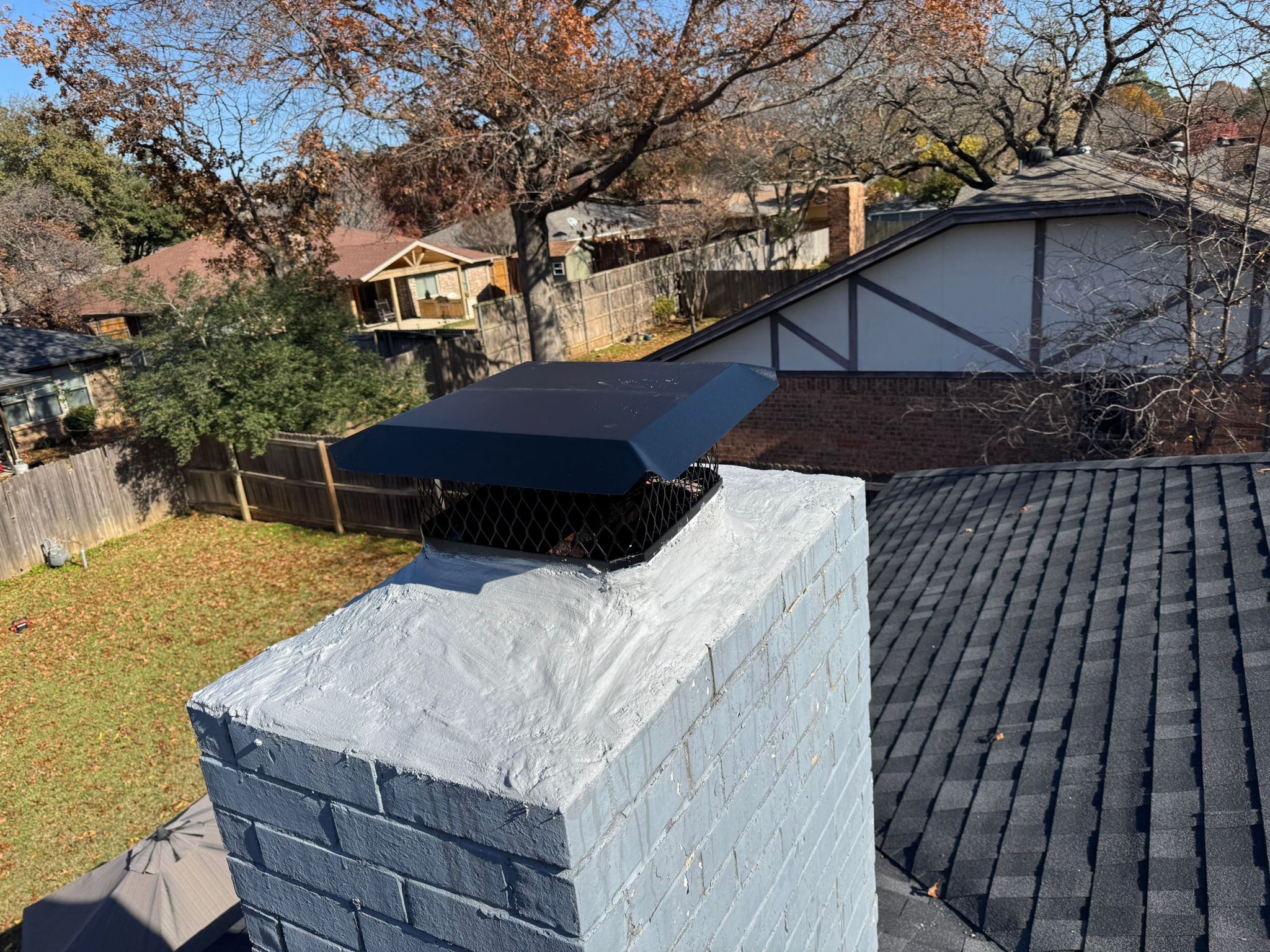
A Chimney Cap Keeps Rain, Animals, and Debris Out of Your Flue
A chimney cap is a metal cover installed at the top of a flue opening. It blocks rain, debris, and animal entry while letting combustion gases exit.
A properly sized cap also reduces wind-induced downdraft — the draft reversal caused by horizontal wind crossing an exposed flue top. For NYC homeowners with wood-burning or gas-vented fireplaces, cap installation is one of the highest-return maintenance decisions you can make.
Here’s what most homeowners don’t realize about chimney caps: the cap doesn’t just sit on top. It has to fit the specific dimensions of your flue opening. A cap that’s even slightly off leaves gaps. Those gaps let in exactly what you’re trying to keep out.
Prime Chimney installs single-flue and multi-flue caps across all five boroughs — with material selection documented at the time of service. Stainless steel for coastal and high-wind exposure. Copper for landmark and historic district buildings where appearance is a preservation requirement.
NYC Chimneys Face Conditions That Make Cap Selection a Real Decision
NYC rooftops expose chimneys to wind, salt air, and wildlife pressure that inland locations simply don’t see.
That combination makes cap material and fit more consequential here than in a suburban setting.
The Rockaway Peninsula and South Brooklyn neighborhoods along Jamaica Bay sit in a salt-air corridor. Galvanized steel — the standard lower-cost option — oxidizes within three to five years in that environment. The zinc coating that resists rust breaks down under repeated salt exposure and humidity. Once it goes, rust follows quickly. A galvanized cap in Rockaway may need replacement before a stainless steel cap installed the same week in Astoria shows any wear at all.
In spring and summer, pigeons and starlings find uncapped flues in Brooklyn and Queens row houses and use them as nesting sites. By October, when the homeowner lights the first fire of the season, there’s a nest at the base of the flue — sometimes with standing water underneath it. None of that was visible from inside. A properly installed cap with a mesh skirt stops that cycle before it starts.
The point: cap selection in New York City is a material and fit decision, not a product swap.
The First Thing We Do Is Measure Every Flue Opening Individually
I’ve been on plenty of rooftops in this city where someone installed a cap without measuring first.
You can tell immediately — the base doesn’t sit flush, there’s a visible gap on one side, and rain gets in right past the cap that was supposed to stop it.
On a Brooklyn row house with three flues sharing one chimney stack, those flues are almost never the same size. One might serve a furnace, one a fireplace, one an old boiler flue that’s been partially bricked. Each opening has its own dimensions. We record the exact interior and exterior measurement of each flue collar before we touch a cap. That measurement determines whether a single-flue cap — a cap sized to fit one flue opening — fits flush against the liner collar, or whether we’re looking at a multi-flue cap that spans the full crown surface.
A multi-flue cap — a single unit that covers the entire chimney crown — is the right call when two or three flue openings sit close together and individual caps would leave the crown surface between them exposed to rain. That crown exposure is a real problem. Water sits on an uncovered crown, works into any existing hairline cracks, and starts the freeze-thaw cycle that eventually cracks the crown through. The cap solves the flue entry problem. But if it’s undersized or poorly placed, it creates a new water problem at the crown perimeter.
We bring common stainless steel cap sizes on every vehicle. For non-standard openings — which is most of what we find in pre-war NYC construction — we measure and order to fit. The homeowner gets one service call, not a return trip because the first cap didn’t fit.

Multi-Flue Stacks Need Individual Attention, Not a Universal Solution
Every flue opening on a multi-flue chimney stack may be a different dimension — and a cap that fits one will not necessarily fit another.
This comes up most often on pre-war row house chimneys in Brooklyn, Queens, and the Bronx, where a single masonry stack carries two or three flues from different appliances. The temptation is to place one large multi-flue cap over the whole crown and call it done. Sometimes that’s exactly right. Other times, the flue collar heights vary enough that a single cap sits unevenly, and the lower side leaves a gap.
A separate cap sized to each individual flue opening. The right call when flue collar heights vary across the stack or when openings are spaced far enough apart that a spanning unit would sit unevenly. Each cap seats flush against its own liner collar — no compromise on fit.
A single unit covering the entire chimney crown. The right call when two or three flue openings sit close together and individual caps would leave the crown surface between them exposed to rain. The cap base is anchored to the crown and the perimeter sealed to prevent water entry at the edges.
Before we recommend a single multi-flue cap versus individual single-flue caps, we assess the crown layout. How many flues? What are the collar heights? Is the crown surface intact or are there existing cracks that need attention before a cap is set? The cap selection follows that assessment — not the other way around.
Material selection is documented in our service record. If you’re in a coastal neighborhood and we install a stainless steel cap — fabricated from Type 304 or 316 stainless steel, which resists rust and corrosion from salt-laden air — that’s noted. If you’re in a landmark district and copper is required by your building’s preservation standards, that’s noted too.
Our Standards for Chimney Cap Installation in New York City
Every cap we install is sized, matched, and documented — no universal fits, no skipped measurements.
Here’s what that looks like in practice:
Flue Measurement First
Interior and exterior dimensions recorded before any cap is selected or ordered. Every flue on a multi-flue stack gets its own measurement — they’re almost never the same size in pre-war NYC construction.
Material Matched to Exposure
Type 304 stainless steel for coastal and high-wind locations. Copper for historic and landmark buildings. Galvanized steel only where exposure conditions warrant it and the homeowner is briefed on its shorter NYC service life.
Single-Flue vs Multi-Flue Assessment
Crown layout evaluated before a cap configuration is chosen. Collar heights, opening spacing, and crown surface condition all factor into whether a spanning unit or individual caps are the right call.
Mesh Height Checked
The mesh skirt height must allow combustion gases to exit freely — a skirt that’s too short restricts draft; one that’s too tall admits horizontal wind that creates wind-induced downdraft. Tuned to the flue type.
Fit Confirmed at Installation
Cap base seated flush against the liner collar. No gaps at the perimeter. Fit checked from below the roofline and from the flue opening itself before the visit closes.
Service Record Updated
Material type, cap configuration, and flue measurements documented at the time of the visit. Useful the next time the cap needs replacement or a contractor asks what’s up there.
Uncapped Flue? Get the Measurement First.
One call. One visit. Cap measured, sized, and installed — with material and dimensions documented at the time of service. (347) 801-0260 — 24/7 across all five boroughs.
How Chimney Cap Installation Works With Prime Chimney
Diagnostics — Measuring Before Selecting
We start from the top. The tech accesses the chimney crown and records the number of flue openings, interior and exterior dimension of each flue collar, the crown condition, and whether any existing cap is present and what failed on it. For multi-flue stacks, collar heights are measured individually — a detail that determines whether a single spanning unit will sit level or whether individual caps are the better fit. Wind exposure and neighborhood salt-air context factor into material selection at this stage. A chimney in Sunset Park facing Jamaica Bay gets a different material recommendation than the same chimney in Woodside.
Implementation — Fitting the Cap to the Flue
The selected cap is fitted to the flue collar. For single-flue caps, the base is seated firmly against the liner and secured — typically with screws into the flue collar or with a slip-fit band depending on liner type. For multi-flue caps spanning the full crown, the cap base is anchored to the crown surface and the perimeter sealed to prevent water entry between the cap base and the crown edge. Stainless steel caps arrive with a factory finish. Copper caps are installed with allowance for natural patina development — the homeowner is briefed on what to expect as the copper weathers.
Post-Service Confirmation — Fit and Function Verified
After installation, we check the fit from below the roofline and from the flue opening itself. The mesh is checked for gaps or distortion. The cap hood angle is confirmed to break horizontal airflow before it enters the flue — the design feature that reduces wind-induced downdraft. The service record is updated with the cap type, material, dimensions, and installation date. That record is yours — useful the next time the cap needs replacement or a contractor asks what’s up there.
Areas We Serve in New York City
Prime Chimney installs chimney caps across all five boroughs — no geographic exclusions within the city.
We serve Manhattan, Brooklyn, Queens, the Bronx, and Staten Island. Coastal neighborhoods along Jamaica Bay and the Rockaway Peninsula are a specific focus for stainless steel cap work, given the accelerated corrosion rate in those salt-air zones.
We also serve landmark and historic district buildings across Brooklyn Heights, Fort Greene, Harlem, and the Upper West Side where material selection is a preservation requirement, not just a preference.
Ready to Get Your Flue Capped? Here's the Next Step.
A chimney cap is a one-visit fix that protects your flue from rain, wildlife, and wind-driven debris for years.
Call Prime Chimney at (347) 801-0260 — available 24/7. Tell us your building type, borough, and whether you have one flue or multiple.
We’ll schedule a visit, measure what’s there, and install the right cap for your specific flue and exposure conditions. One call. One visit. Done.

Frequently Asked Questions
That depends on the dimensions of your specific flue opening — and on whether you have one flue or several. There’s no universal size. Single-flue caps are sized to the interior and exterior diameter of a single flue collar. Multi-flue caps span the full chimney crown and are sized to the crown footprint. In pre-war NYC construction, flue openings are almost never standard sizes, and on a row house with three flues sharing one stack, each opening is typically a different dimension. The only reliable answer is from a rooftop measurement: interior and exterior dimensions of each flue collar, recorded individually, before any cap is ordered. We bring common stainless steel cap sizes on every vehicle. For non-standard openings — which is most of what we find here — we measure and order to fit.
A single-flue cap is sized to fit one individual flue opening — the base seats flush against that one flue collar. A multi-flue cap is a single unit that spans the entire chimney crown, covering multiple flue openings at once. Single-flue caps are the right call when collar heights vary across the stack or when openings are spaced far enough apart that a spanning unit would sit unevenly. Multi-flue caps are the right call when two or three flue openings sit close together and individual caps would leave the crown surface between them exposed to rain. The decision follows the crown layout — number of flues, collar heights, opening spacing, crown surface condition — assessed before the cap is selected, not after.
A Type 304 or 316 stainless steel cap installed correctly will outlast most other chimney components on the building — typically twenty to thirty years or more under normal NYC rooftop exposure, including the salt-air corridors along Jamaica Bay and the Rockaway Peninsula. Type 316 in particular is engineered for marine and coastal environments and resists pitting and crevice corrosion that lower grades develop over time. By comparison, galvanized steel — the standard lower-cost option — oxidizes within three to five years in salt-air zones once the zinc coating breaks down under repeated salt exposure and humidity. The material recommendation we make depends on where your chimney sits in the city.
Yes — when the cap has a properly sized mesh skirt. Pigeons and starlings find uncapped flues in Brooklyn and Queens row houses in spring and summer and use them as nesting sites. By October, when the homeowner lights the first fire of the season, there’s a nest at the base of the flue — sometimes with standing water underneath it. None of that is visible from inside the house. The mesh skirt on a properly installed cap is sized to allow combustion gases to exit freely while blocking birds and small wildlife from entering. The mesh height has to be tuned — too short restricts draft; too tall admits horizontal wind that creates wind-induced downdraft. We check the mesh fit at installation and confirm there are no gaps or distortion at the perimeter.
For a standard single-flue cap with a measurement that matches one of the common sizes we carry on the truck, the installation is a one-visit, one-call job — typically completed in under an hour on the roof. For non-standard openings that require an ordered cap, we measure on the first visit and return to install once the cap arrives. For multi-flue stacks, the diagnostic and material selection take longer, but the install itself is still a single visit. Call (347) 801-0260 — available 24/7 across all five boroughs. Tell us your building type, borough, and whether you have one flue or multiple, and we’ll schedule the right kind of visit.
© Prime Chimney Sweep & Repair · 919 E. 29th St., Brooklyn, NY 11210 · (347) 801-0260 · Licensed & insured · Serving all 5 NYC boroughs 24/7.