Hazard Stopped Today, DOB Documentation Same Day
24/7 dispatch from our Brooklyn base. Loose brick removal, temporary waterproof wrap, and a written condition report — usable as a DOB violation response from day one. Delivered the same visit.
What Emergency Spalling Brick Repair Actually Covers
Emergency spalling brick repair means stabilizing a dangerous chimney face before more material falls.
It is not a cosmetic service. It is not a scheduled project. It is a same-day response to a public hazard.
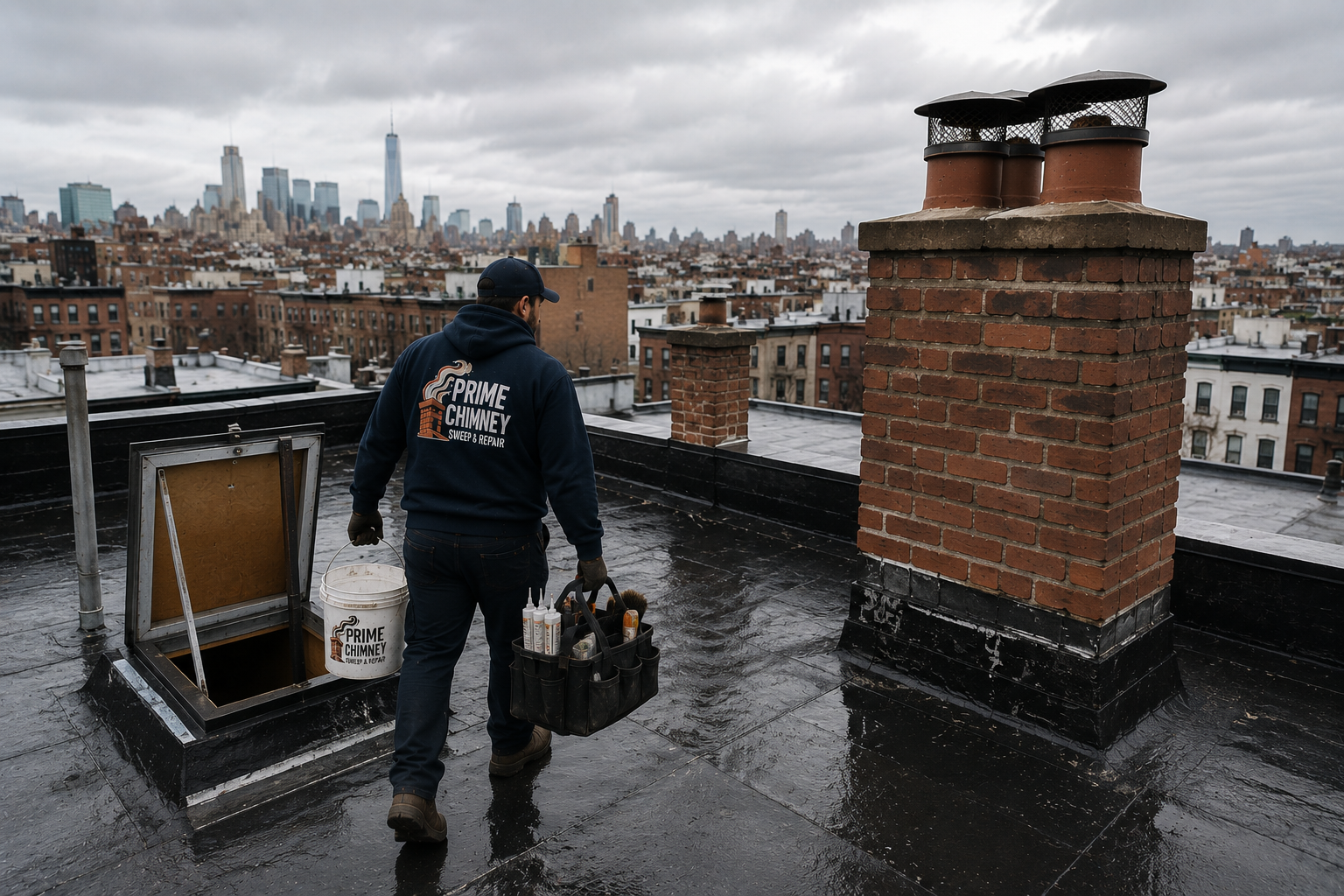
When bricks detach from a chimney face on a five- or six-story NYC building, the risk zone extends well beyond the building’s footprint. A response visit from Prime Chimney covers three things: removing loose brick material at risk of falling, applying a temporary waterproof wrap over the exposed masonry, and producing a written condition report at the time of the visit.
That report documents the exact state of the chimney when we arrived. It identifies what was loose, what was removed, and what temporary protection was applied. Property owners dealing with a DOB violation notice can use it as evidence that corrective action was initiated on a specific date. That distinction matters in NYC’s enforcement process.
We dispatch 24 hours a day, 7 days a week — including weekends and holidays. Bricks don’t fall on schedule.
Why NYC Attached Buildings Create a Wider Fall Radius
In NYC, a deteriorating chimney doesn’t just threaten one property — it threatens the sidewalk, adjacent yards, and neighboring rooftops.
A chimney on the roof of a six-story attached row house in Crown Heights or Mott Haven sits roughly 70 feet above street level. Brick fragments falling from that height don’t land straight down. They travel outward. The fall radius on a chimney that high can cover the full width of a sidewalk and reach the rooftop of the building next door.
Here’s what most homeowners don’t realize about how complaints start in NYC: the first notification often comes not from the property owner but from a neighbor, a pedestrian, or a building super next door. A 311 call gets logged. A DOB inspector notes it on a walkthrough. By the time the owner receives anything in writing, the clock on the compliance deadline is already running.
Brooklyn, the Bronx, and upper Manhattan generate the highest volume of emergency spalling calls we receive. These boroughs have dense concentrations of pre-war attached buildings where deteriorating upper-story chimney faces are a consistent seasonal pattern — especially in late winter and early spring, after a full cycle of freeze and thaw has worked through the mortar joints.
The DOB Complaint Call That Started Before the Owner Knew Anything Fell
A property owner in the South Bronx called on a Thursday morning.
He didn’t know anything was wrong until his neighbor texted him a photo. Brick fragments had landed on the shared rear yard and the back end of the adjacent rooftop. His neighbor had already called 311.
By the time he called us, the complaint was logged. He hadn’t received a notice yet, but the timeline had already started. He needed two things: the hazard stopped immediately, and a written record showing he’d acted the same day.
We dispatched within hours. On the rooftop, the freeze-thaw cycling had done its work over what looked like at least two or three winters. The upper courses on the south face of the chimney — the side facing the neighboring building — had lost most of their mortar bond. Several bricks were completely free. Two had already fallen. More were rocking.
We removed the loose material, wrapped the exposed section in waterproof membrane, and photographed every step. The condition report produced that afternoon documented the chimney state on arrival, the specific bricks removed, and the temporary protection installed. He submitted it to the DOB the next day with a cover letter from his attorney. The report showed corrective action was initiated on the date of the complaint. That mattered.
The full repointing repair was scheduled for three weeks later when the weather window opened. The emergency visit stopped the hazard and started the paper trail.

Documentation That Works on the Day It's Produced
A written condition report from an emergency stabilization visit is a usable document — not a formality.
NYC property owners and their attorneys rely on it to demonstrate that corrective action was taken promptly.
Here’s how it’s used. The NYC DOB issues violation notices for deteriorated or falling chimney masonry. Those notices come with compliance deadlines. The deadline clock starts when the complaint is filed — not when the owner finds out. Showing the DOB that an emergency response crew was on-site and working the same day the complaint was logged demonstrates action taken before the notice arrived, not after.
That’s a different position to be in. It affects how the DOB processes the response. It affects how a managing agent or co-op board evaluates the owner’s responsiveness. And in cases where adjacent property or personal injury is a concern, it establishes a clear record of when stabilization was completed.
Every emergency spalling visit from Prime Chimney produces a written report. It includes the date and time of arrival, a description of chimney condition on arrival, the number and location of bricks removed, the temporary measures applied, and a recommended follow-up scope for full repair. The homeowner receives this before we leave.
Our Standards for Emergency Stabilization Visits
Every emergency spalling visit follows a consistent stabilization sequence — regardless of the time of day we’re called.
Here’s what that looks like in practice:
Roof Access Established Safely
Before any masonry work begins, roof access is established safely. Unstable chimneys at height require a stable working position before the tech touches anything.
All Loose Brick Material Removed
A brick that’s partially detached but still in place is the next one to fall. It comes out during the emergency visit — not left for the scheduled repair to handle.
Exposed Masonry Protected With Waterproof Membrane
Once loose material is cleared, the exposed masonry core gets a temporary waterproof membrane. This slows further moisture infiltration between the emergency visit and the full repair.
Condition Photographed at Each Stage
Photographs on arrival, during loose brick removal, and after temporary protection is applied. The visual record is part of the documentation deliverable, not a separate step.
Written Condition Report Produced Before Leaving
Not mailed later. Delivered at the time of the visit. The homeowner receives the completed document before the crew leaves the building.
Recommended Follow-Up Scope Included
The emergency visit stops the hazard. The written scope in the report tells the owner what full repair looks like — repointing, partial rebuild, or full chimney rebuild based on what we found.
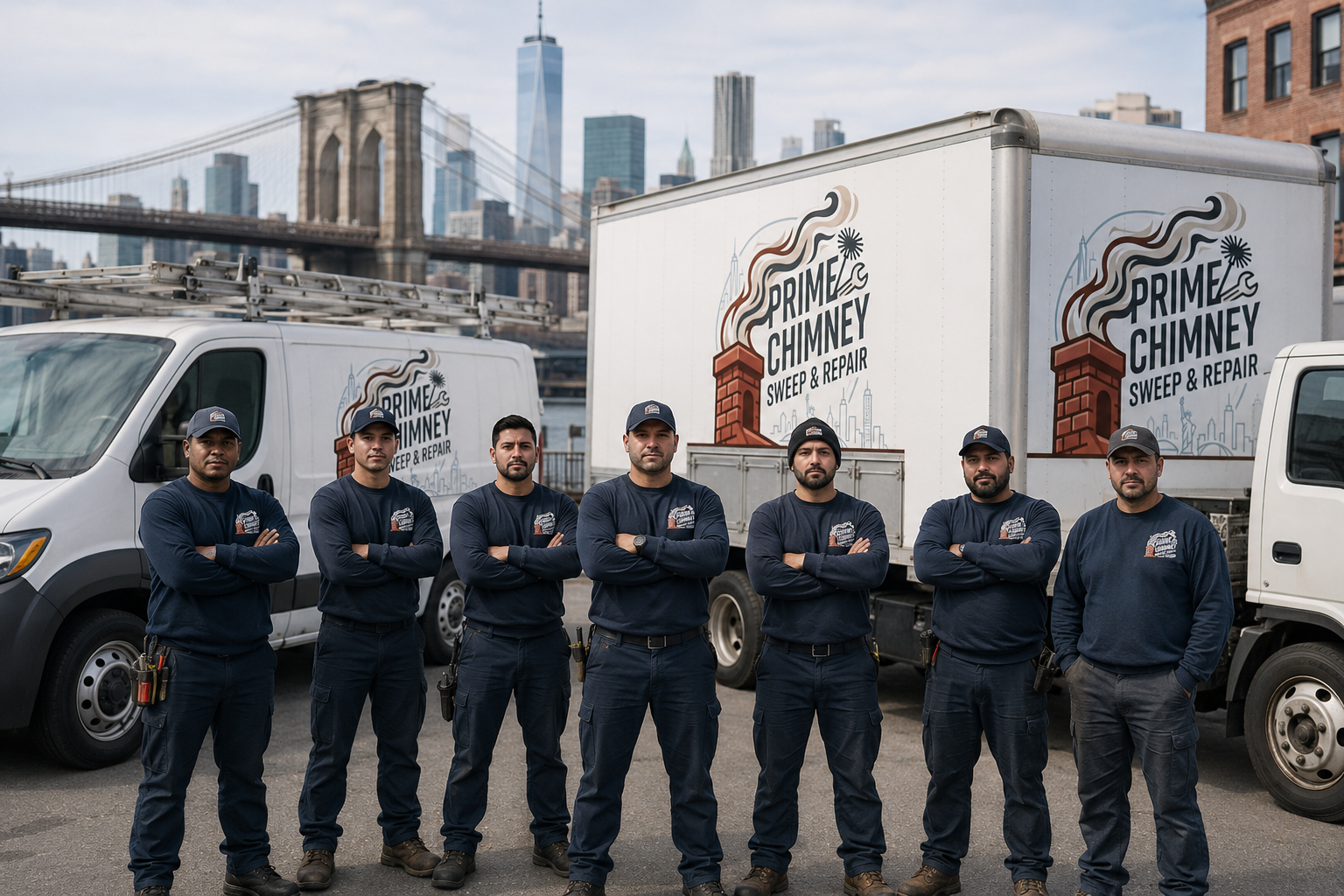
Our 10-crew operation means we can dispatch to spalling calls across multiple boroughs simultaneously. A Friday night call gets the same response as a Monday morning one.
Bricks Falling? Notice Just Arrived? Call 24/7.
Same-day stabilization, waterproof wrap, written DOB-ready condition report before we leave. Call (347) 801-0260 — Brooklyn dispatch, all five boroughs, weekends and holidays.
How the Emergency Visit Works: Loose Brick Removal, Wrap, and Documentation
The emergency spalling visit has three distinct steps — each one accomplishes something specific, and none of them can replace the others.
Loose Brick Removal
The first task is eliminating the immediate public hazard. Every brick on the chimney face that has lost its mortar bond is physically removed. This includes bricks that are rocking, bricks that have separated but not yet fallen, and brick fragments from units that have already partially broken. The tech works from the roof surface with a stable setup before any hands go on the chimney face. Removed material is collected rather than dropped. In NYC attached buildings with narrow rear yards and adjacent rooftops, a carelessly handled loose brick during removal creates its own hazard.
Temporary Waterproof Wrap
Once loose material is cleared, the exposed masonry core needs protection. An unprotected chimney core — raw mortar, underlying brick courses, any exposed flue tile — absorbs water from the next rain event. That water works deeper into the structure before the full repair can be scheduled. We apply a waterproof membrane wrap over the stabilized section. It holds through normal rain events and buys the days or weeks needed to schedule a full repointing or masonry repair without the chimney continuing to deteriorate.
Written Documentation
The condition report is produced at the site, not back at the office. It includes: the time of arrival, the condition of the chimney face as found, the specific location and quantity of bricks removed, the temporary protection installed, and the recommended scope for full repair. Photographs are taken at each step and included with the report. The homeowner receives the completed document before the crew leaves the building. If a DOB violation notice arrives in the next few days, the report shows a response was already underway.
Emergency Spalling Brick Repair Across New York City
Prime Chimney dispatches from Brooklyn to all five NYC boroughs, 24 hours a day.
We cover Brooklyn, Manhattan, Queens, the Bronx, and Staten Island with no borough exclusions. Emergency spalling calls are concentrated in neighborhoods with dense pre-war attached building stock — Crown Heights, Bed-Stuy, Mott Haven, Highbridge, Washington Heights, and the row house corridors of southern Brooklyn. We work on these buildings every week.
Call (347) 801-0260 at any hour for same-day emergency dispatch.
Call Now — Stabilize the Chimney and Start Your Paper Trail
Same-day emergency brick stabilization, written condition report in hand before we leave.
If bricks are falling — or if you’ve received a complaint, a notice, or a call from a neighbor — call Prime Chimney now at (347) 801-0260. We dispatch 24/7 from our Brooklyn base at 919 E. 29th St.
Tell us your borough, your building type, and what you’re seeing. We’ll confirm dispatch.
The paper trail starts with the emergency visit.
Frequently Asked Questions
The compliance deadline clock starts when the complaint is filed with the DOB, not when you receive notice in the mail. In NYC, complaints typically originate from a 311 call placed by a neighbor, pedestrian, or building super next door — meaning the timeline can be running for days before the property owner is aware of it. Once filed, the DOB issues a violation notice with a specific compliance deadline. The emergency stabilization visit and same-day written condition report are designed to demonstrate that corrective action was initiated on or near the date the complaint was logged, which puts the owner in a stronger position when the notice arrives. The full repair is then scheduled within the compliance window.
The emergency condition report documents what was found on arrival, what was removed, what temporary protection was applied, and a recommended scope for full repair — produced at the site with photographs from each stage. Property owners and their attorneys use it to demonstrate that corrective action was taken promptly, which is the question the DOB and most insurance adjusters are evaluating after a falling-brick incident. For situations involving adjacent property damage or personal injury claims, an attorney may request a separate stamped engineer’s report for structural assessment. The emergency report is not a substitute for that — but it documents the immediate response and timeline, which is a distinct and necessary record. We can coordinate with a structural engineer for the full assessment if the situation warrants one.
The waterproof membrane wrap is designed to hold through normal rain events and buys days to weeks of protection — enough time to schedule the full repointing or masonry repair without the chimney continuing to deteriorate from moisture infiltration. It is not a permanent solution. The membrane is intended to be removed when the full repair begins. In practice, most emergency spalling visits transition to scheduled full repairs within one to four weeks depending on weather conditions and crew availability. We work with each property owner to set a realistic full-repair date during the emergency visit so the wrap doesn’t sit beyond its useful window.
We dispatch 24 hours a day, 7 days a week — including weekends, holidays, and overnight calls. Our 10-crew operation means we can respond to spalling calls across multiple boroughs simultaneously. A Friday night call gets the same response as a Monday morning one. When you call, you reach a crew — not a voicemail or a scheduling form. The conversation covers your borough, building type, and what you’re seeing on the chimney (visible loose bricks, fragments on the ground, photo from a neighbor, DOB notice received). The crew is rolling within the window we confirm with you on the call.
The emergency visit has one job: stop the immediate public hazard and produce documentation of what was done. It removes loose brick material from the chimney face, applies a temporary waterproof wrap over the exposed masonry, and delivers a written condition report before the crew leaves. The full repair is a separate scheduled service that addresses the underlying deterioration — typically repointing of the affected courses, partial rebuild where mortar bonds are compromised across multiple courses, or in extreme cases full chimney rebuild above the roofline. Both services are needed when bricks are falling: the emergency visit stops the hazard and starts the paper trail, the scheduled repair fixes the structural condition. Call (347) 801-0260 — we’ll dispatch for stabilization first, then schedule the full repair within the compliance window.
© Prime Chimney Sweep & Repair · 919 E. 29th St., Brooklyn, NY 11210 · (347) 801-0260 · Licensed & insured · Serving all 5 NYC boroughs 24/7.