Birds nesting inside a chimney block airflow and create a fire hazard. We remove active and abandoned nests, clear debris, and cap the flue so the problem does not come back. Serving Park Slope, Prospect Heights, Windsor Terrace, and the surrounding Brooklyn neighborhoods.
Most of Park Slope's housing stock dates from the 1880s through the 1920s. These brick rowhouses and brownstones have tall, narrow flues that chimney swifts and starlings treat as natural nesting sites. By early spring, a pair of birds can build a nest dense enough to reduce draft by 40 to 60 percent.
Learn more about fireplace cleaning NYC →
Learn more about chimney draft analysis New York →
Learn more about chimney leak repair New York →
A blocked flue forces combustion gases back into the living space. Carbon monoxide is odorless. Homeowners often do not realize there is a problem until the fireplace smokes badly or a detector triggers.
Chimney swifts are federally protected under the Migratory Bird Treaty Act. If the nest contains active eggs or chicks, removal must wait until the young have fledged -- typically a 30-day window from late April through August. We assess the nest status first and advise you on the legal timeline before any work begins.
Full chimney animal removal details →
We run a camera through the flue to locate the nest, measure blockage, and check the flue liner for heat damage or cracking. This takes 20 to 30 minutes and tells us exactly what we are working with before any tools go in.
We drop professional-grade rods and brushes from the top and vacuum from the firebox below. Twigs, feathers, and droppings are bagged and removed. Most jobs take 2 to 4 hours depending on how far the material has settled into the flue.
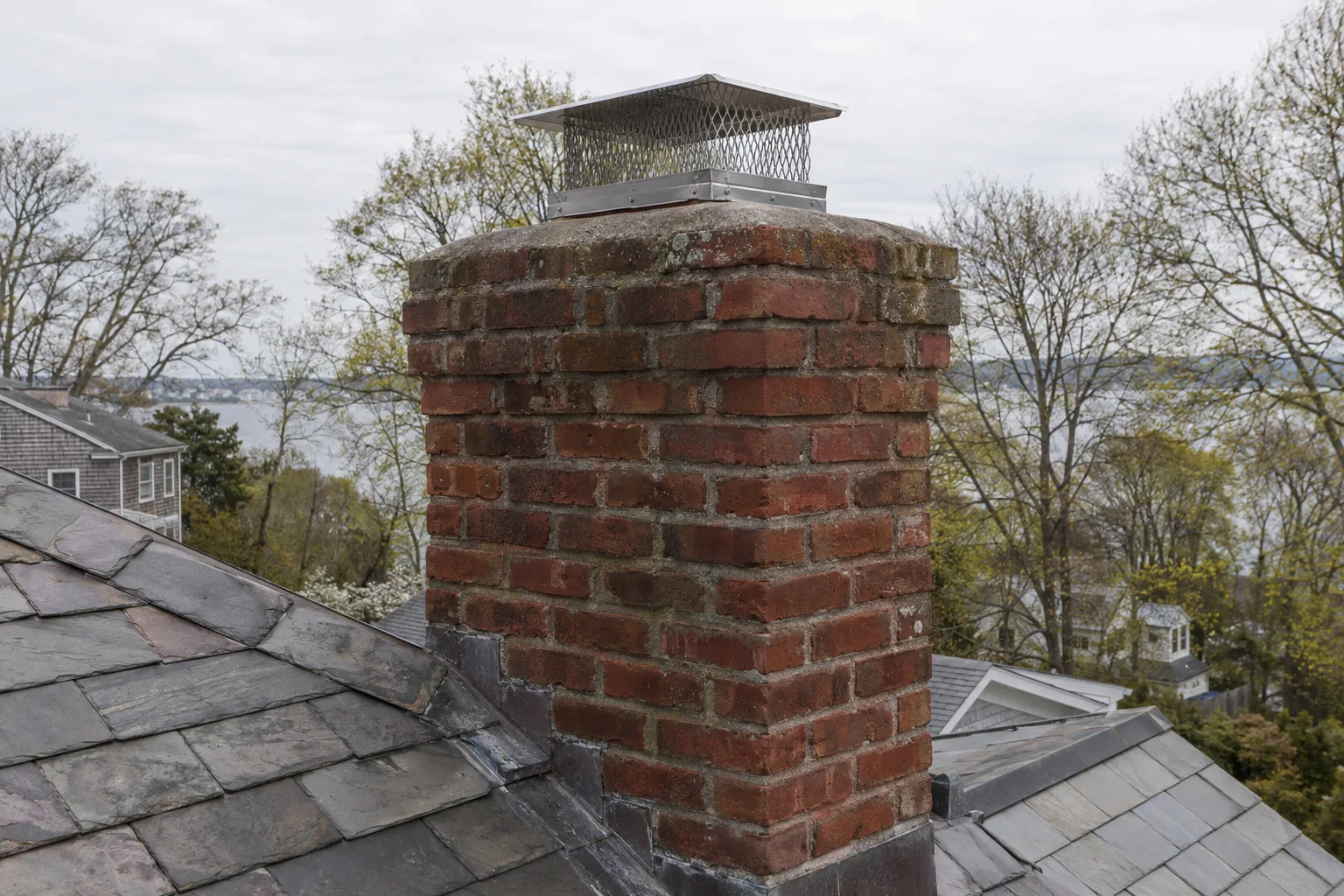
A properly fitted chimney cap is the only permanent fix. We measure the flue opening and install a stainless steel mesh cap that blocks birds and squirrels while letting smoke and gas vent freely.
Prime Chimney Sweep & Repair provides chimney services in Park Slope, NY. We work on the brick rowhouses and brownstones that make up most of this neighborhood -- buildings where the chimneys run through shared walls and often serve multiple floors. That construction detail matters because it changes how we access the flue and how we isolate work from adjacent units.
Our service range covers the full scope of chimney and fireplace work. Nest removal and animal exclusion are part of a broader set of services that includes chimney inspections at all three NFPA 211 tiers, creosote removal, crown repair, waterproofing, and gas fireplace service. We do not subcontract chimney work to general handymen -- every job is handled by technicians who work chimneys specifically.
For Park Slope homeowners buying or selling a property, a chimney inspection is often required before closing. Our real estate chimney inspection service produces a written report structured around NFPA 211 standards -- the format most attorneys and lenders expect to see.
Brooklyn's wet winters and freeze-thaw cycles do real damage to masonry over time. If a bird nest has been sitting in a flue for more than one season, the moisture it holds often accelerates existing cracks in the liner or mortar joints. We check for that damage as part of every nest removal job and flag anything that needs follow-up -- whether that is mortar repointing, a crown repair, or full chimney waterproofing.
If a bird or animal is currently inside your home through the fireplace, call us directly. We prioritize these calls. See also our emergency storm damage and animal intrusion service.
☎ (347) 801-0260The specifics that matter for Park Slope homeowners scheduling chimney service.
Chimney swifts return to Brooklyn in April. Most nesting activity runs April through August. Scheduling nest removal or a cap installation in March -- before birds arrive -- means no waiting period and no legal complications.
Park Slope averages 20 to 30 freeze-thaw cycles per winter. Moisture trapped in nest debris speeds up cracking in terracotta flue tiles and mortar joints. After nest removal, we probe the liner specifically for this type of damage.
Nest removal and cap installation do not require a NYC DOB permit. Flue liner replacement and structural chimney repairs typically do. See our full guide on NYC chimney permit requirements for details.
Specific answers for Brooklyn homeowners dealing with chimney birds and blockages.
Still have questions? Call us directly and we will give you a straight answer about your specific chimney.
☎ (347) 801-0260The clearest sign is chirping or scratching sounds coming from the fireplace or flue. You may also see debris -- twigs, feathers, or droppings -- falling into the firebox. If you light the fireplace and smoke pushes back into the room instead of drawing up, that usually means something is blocking the flue. A camera inspection confirms it in under 30 minutes.
It depends on the species and whether the nest is active. Chimney swifts are federally protected. If the nest contains eggs or live young, you cannot legally remove it until the birds have left -- roughly 30 days. House sparrows and European starlings are not protected, and their nests can be removed at any time. We identify the species before quoting you a timeline. For related guidance, see our page on chimney animal removal in NYC.
For non-emergency jobs, we typically schedule within the same week. Spring booking -- April through June -- fills faster because that is nesting season across Brooklyn. If a bird or animal is actively inside your home, call us directly and we prioritize same-day or next-day response. Park Slope is a regular stop for our Brooklyn crews, so travel time is not a limiting factor.
Costs vary with chimney height, the size of the nest, and whether a cap installation is included. A single-flue nest removal on a typical Park Slope rowhouse is a straightforward job. Adding a stainless chimney cap -- which we strongly recommend -- increases the total but eliminates the repeat problem. We give exact pricing after a visual inspection, not before. See our overview of chimney service costs in NYC for general ranges.
Yes -- if the flue is left open, birds return to the same location the following spring. A chimney cap is the only reliable preventive measure. Chimney swifts in particular are highly site-loyal; the same colony will attempt to reuse a familiar chimney for years. Installing a correctly fitted cap during the same visit as nest removal is the most efficient approach.
A fresh nest cleared quickly causes minimal damage. The problem is when nests sit through a winter. Wet organic material against terracotta flue tiles accelerates cracking -- particularly in older Park Slope brownstones where the liner tiles may already be near the end of their service life. After clearing any nest, we inspect the liner and mortar joints. If we see damage that needs attention, we will tell you what it is, why it matters, and what fixing it involves.
Possibly. Decomposing nest material -- and unfortunately sometimes a deceased animal -- produces a strong organic odor that travels down the flue and into the room. Humidity pulls it in faster, which is why the smell often intensifies after rain. After removing the source material, we can address any residual odor. Our page on fireplace odor removal in NYC covers the full range of causes.
Do not light the fireplace if you suspect a blockage. A nest in the flue can cause a chimney fire or force carbon monoxide back into your home. Call us and we will assess the situation the same week.
We serve Park Slope, Prospect Heights, Windsor Terrace, Gowanus, and the broader Brooklyn and NYC area. Same-week scheduling available for most non-emergency jobs.